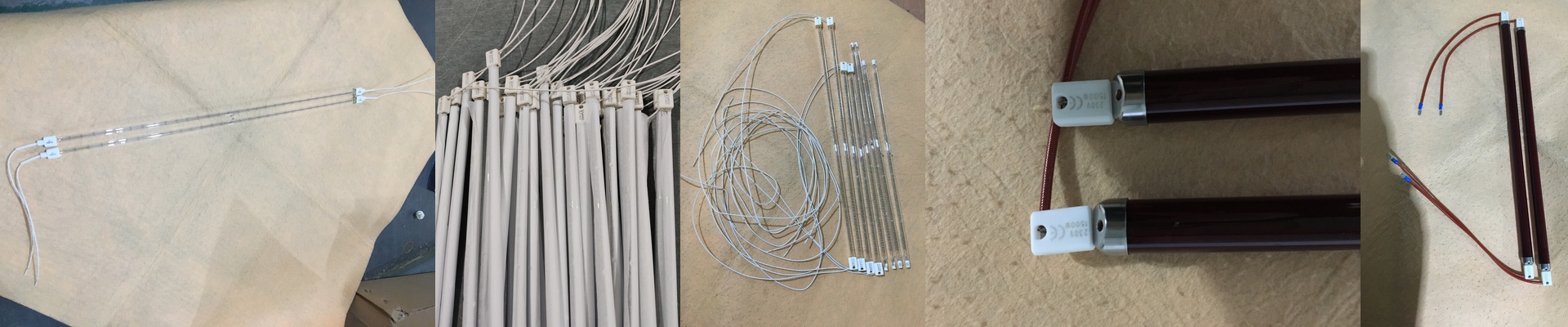
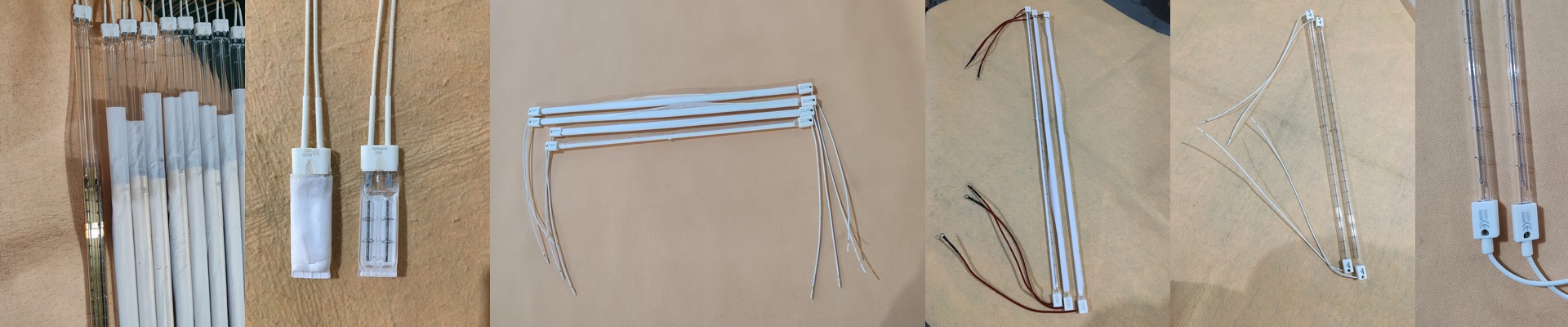
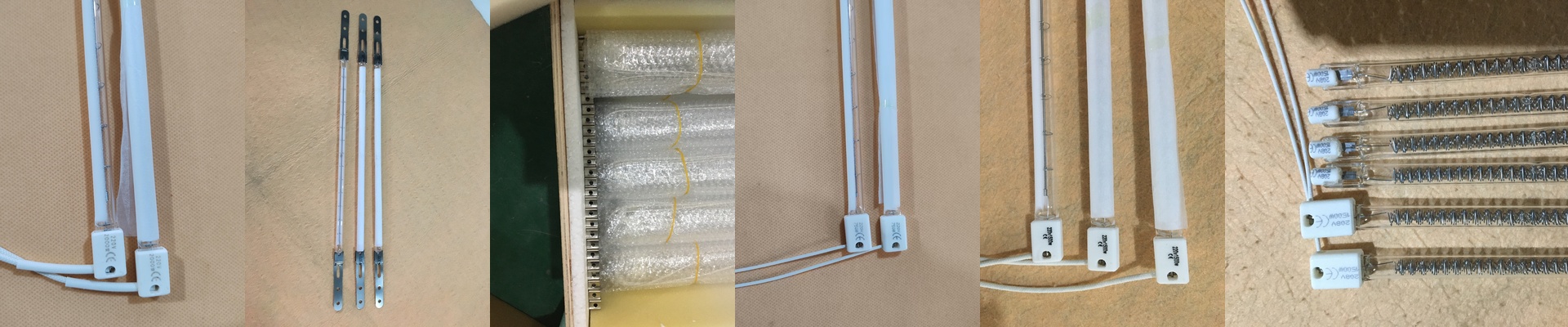
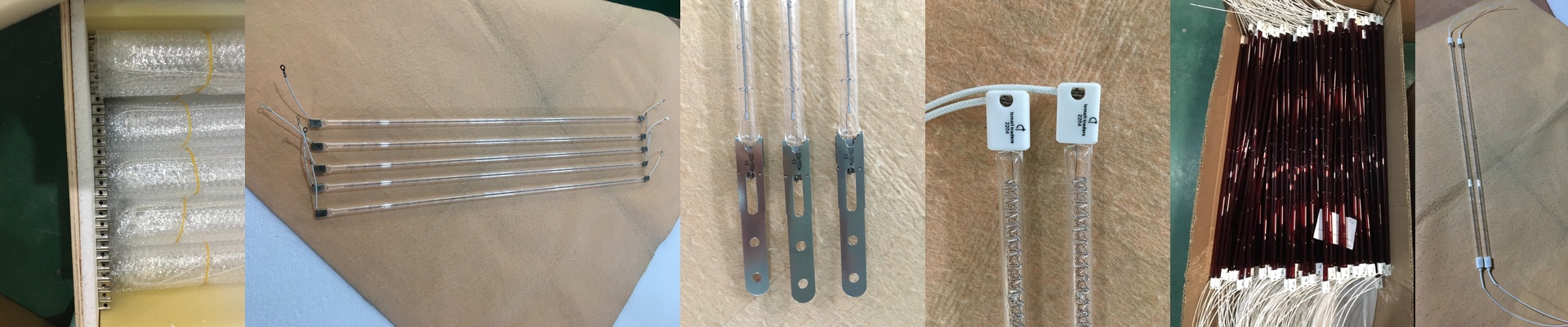
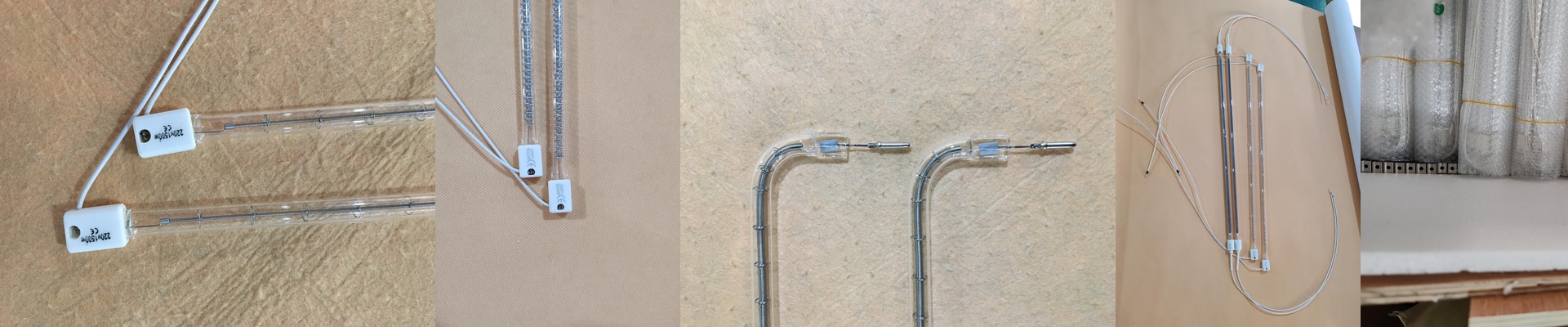
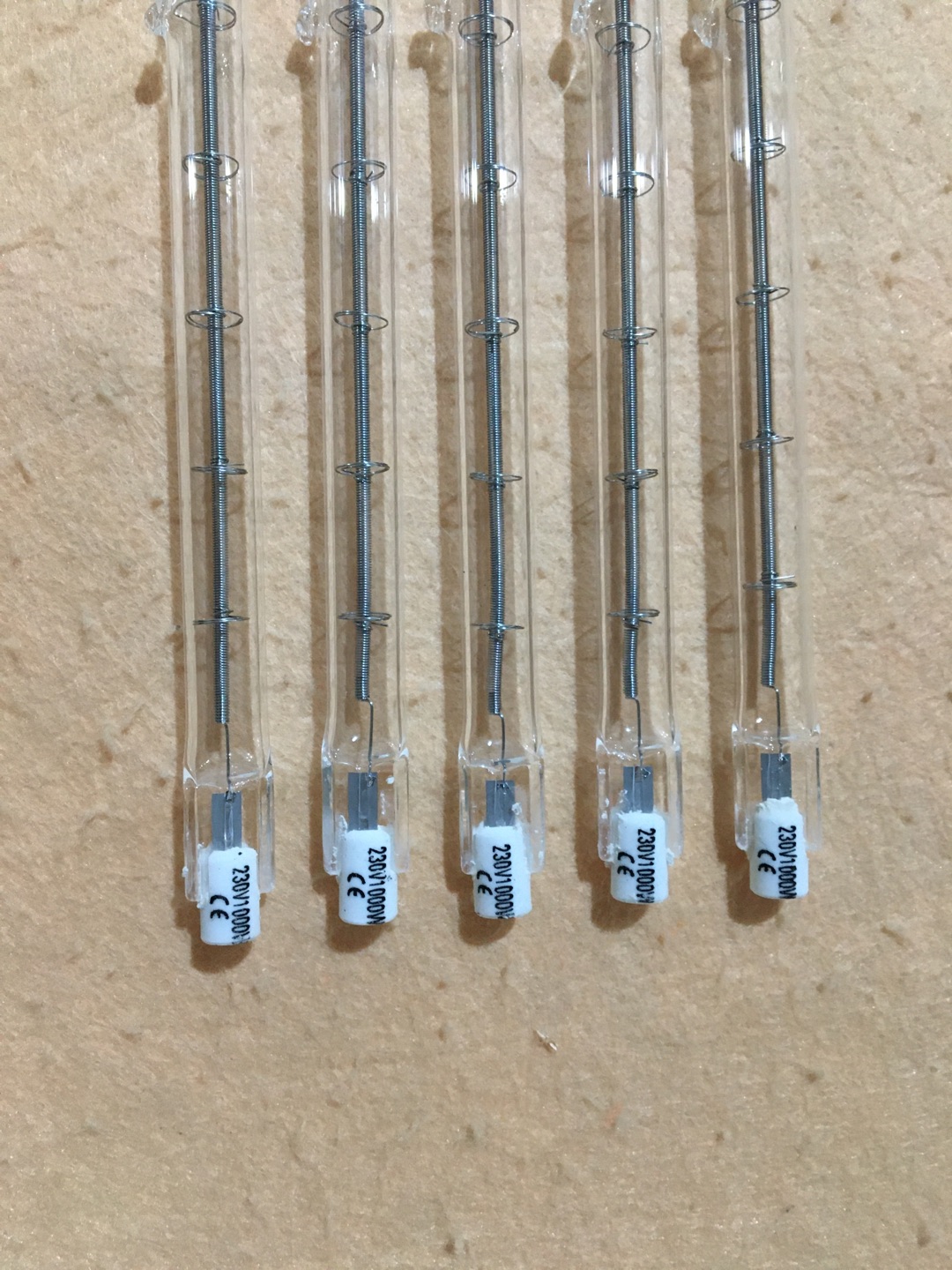
Let’s Talk About 230V Halogen Heating Elements
When we build these 230V halogen lamps, we aren’t just making “light bulbs.” We’re building tools for serious industrial heat. Here is the secret sauce: they use a halogen cycle. Basically, instead of the tungsten filament just wearing down and disappearing, the halogen gas pushes that evaporated tungsten right back onto the filament. Because of that, we can crank the temperature way up. It shifts the heat into shorter wavelengths, which means the heat actually penetrates your materials faster. It’s an immediate hit of energy. Power and Plugging In Since they run on 230V, they plug right into your standard single-phase industrial grid. No fancy converters needed. We tweak the wattage based on how long the tube is and how thick the filament is to make sure you get exactly the amount of heat you’re looking for. But a quick heads-up: these high-wattage tubes pull a lot of current.Check your wiring gauge and contactors.If they aren’t beefy enough, you’re going to end up with overheating terminals, and nobody wants that. The Glass and the Gear We use high-purity quartz for the envelope. Why? Because quartz doesn’t freak out when the temperature jumps from cold to scorching in a split second. It handles that thermal shock without cracking. Depending on your setup, we’ll use R7s or SK15 connectors. They’re designed to be simple drop-in replacements for most heating banks. One thing to watch out for: if your shop is damp or you’ve got chemicals splashing around, keep an eye on those end-cap seals. The quartz itself is tough as nails, but the seals can take a beating in a harsh environment. Putting Them to Work You’ll see these things everywhere—PET blowing, curing paint, welding plastics. The best part? There’s no “warm-up” period. You flip the switch, and the radiation hits the target instantly. But look, these tubes getinsanely hot. You need proper guarding. If your cooling fans quit, that ambient heat can fry your sensors or literally melt the plastic housings around the lamp. Just make sure your airflow matches the wattage. It keeps the filament happy and stops your equipment from melting into a puddle.